

Intrusion
AI-assisted intrusion: what the evidence says so far
Two sources describe AI in intrusions: the NCSC's forward view and one company's account of a reported campaign. Both point to the same defensive priorities.
Last reviewed against NCSC (UK), Anthropic and UK Government (DSIT and Home Office). Sources

The NCSC view
Judgements to 2027
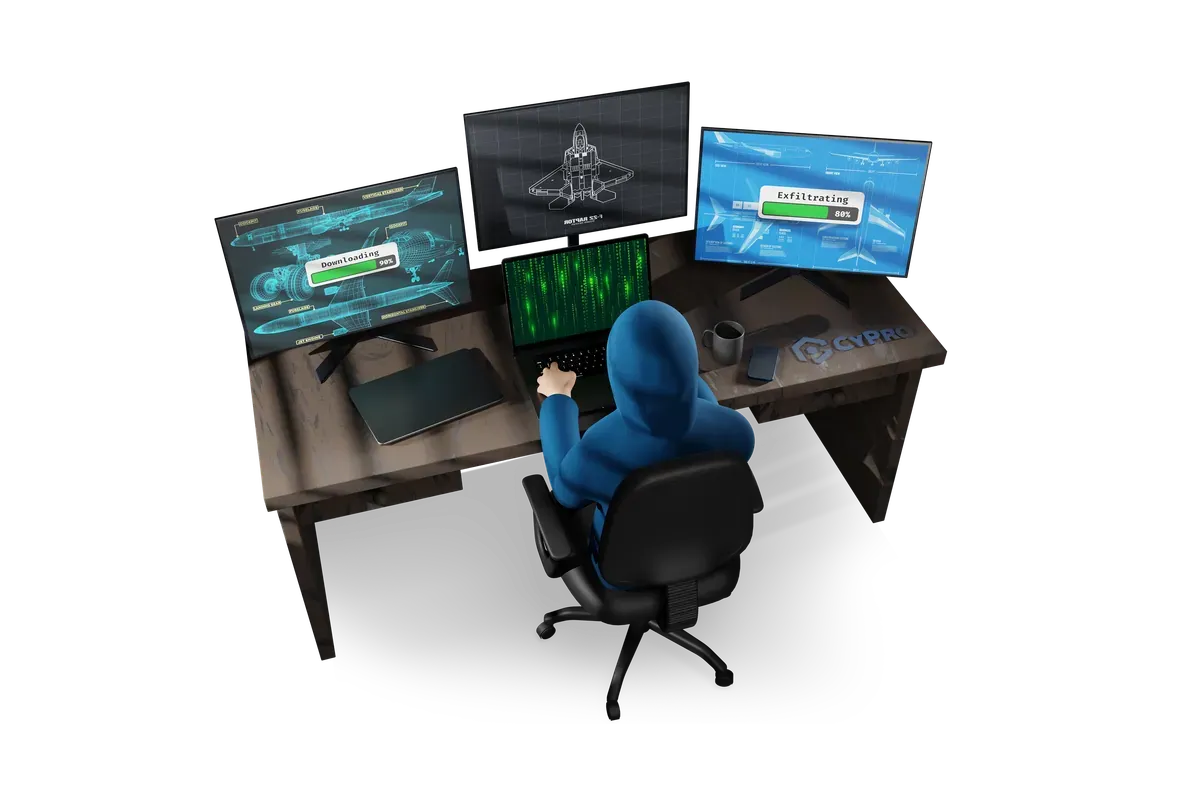
The NCSC's central judgement is that AI will keep improving the speed and effectiveness of parts of an intrusion, which in turn raises how often threats appear and how intense they are [1]. It also expects some systems to stay level with the threat while many others fall behind and become easier targets [1].
The reported case
Anthropic's account
Anthropic published its account on 13 November 2025 [5]. It said it detected a campaign in mid-September 2025 that it assessed with high confidence as Chinese state-sponsored, and that the attackers manipulated its Claude Code tool to try to infiltrate about thirty targets [5]. Targets included technology companies, financial institutions, chemical manufacturers and government agencies, with success in a small number of cases [5].

Two more NCSC points for executives

How much was automated
How to weigh it
This is the vendor's own account of a campaign against its tool, and the figures have not been confirmed by a second source here. It is useful as a signal of direction, not a measure of how common this is.
Response
What follows for defenders
Check these first:
- Which of your systems are reachable from the internet, and who owns each
- How fast a security fix reaches them
- Whether you would notice unusual volumes of requests
- Whether your incident plan has been tested this year
The NCSC adds that organisations should keep their AI systems and dependencies up to date with security measures [1]. Continue with the defence plan.
The practical reading
Speed and volume are the issue. Anthropic recommends that security teams experiment with AI for defence, in areas such as operations centre automation, threat detection, vulnerability assessment and incident response [5].
Keep reading
Read next
Prompt injection
Why the NCSC says prompt injection may never be fully mitigated, and the four design measures UK teams can use to limit its impact.
Read the guide
AI tools at work
How UK organisations can govern the AI tools staff use, using NCSC guidance, the government's Code of Practice and the OWASP list of LLM risks.
Read the guide
Are they new?
Are AI powered attacks a new threat or a faster version of old ones? What the NCSC and the UK survey say, and what it means for priorities.
Read the guideHow CyPro can help
Need a hand with any of this?
Patching is one job. Keeping a vulnerable system safe until it is patched, and proving it, is several more. CyPro's consultants, testers and SOC analysts can take any of them off your plate.

Vulnerability scanning
Find every internet-facing system you run, including the forgotten ones, and see which are still on a vulnerable build.
See the scanning service
Hardening and segmentation
Our consultants put the controls in place that limit the damage when something is missed: firewall rules, network isolation and tighter admin access.
More on cypro.co.uk
24/7 security monitoring
Our SOC analysts watch your systems day and night for the signs of an attack in progress: unexpected processes, new outbound connections, logins that do not fit.
More on cypro.co.uk
Penetration testing
A focused test of your systems and the controls around them, so you know they hold before an attacker finds out for you.
More on cypro.co.uk
Incident response
If you may already be compromised, our responders contain it, preserve the evidence, find out what was touched and get you running again safely.
More on cypro.co.uk
Fractional CISO for the board
A senior security lead who advises the board on what to fix first, what to accept and what to tell customers, and owns the decision record.
More on cypro.co.uk
Know your exposure
Not sure you are protected?
Many of the risks here sit in how an organisation uses AI: what tools staff run, what they can reach and who owns the risk. AI governance work sets that out so controls match the tools in use.